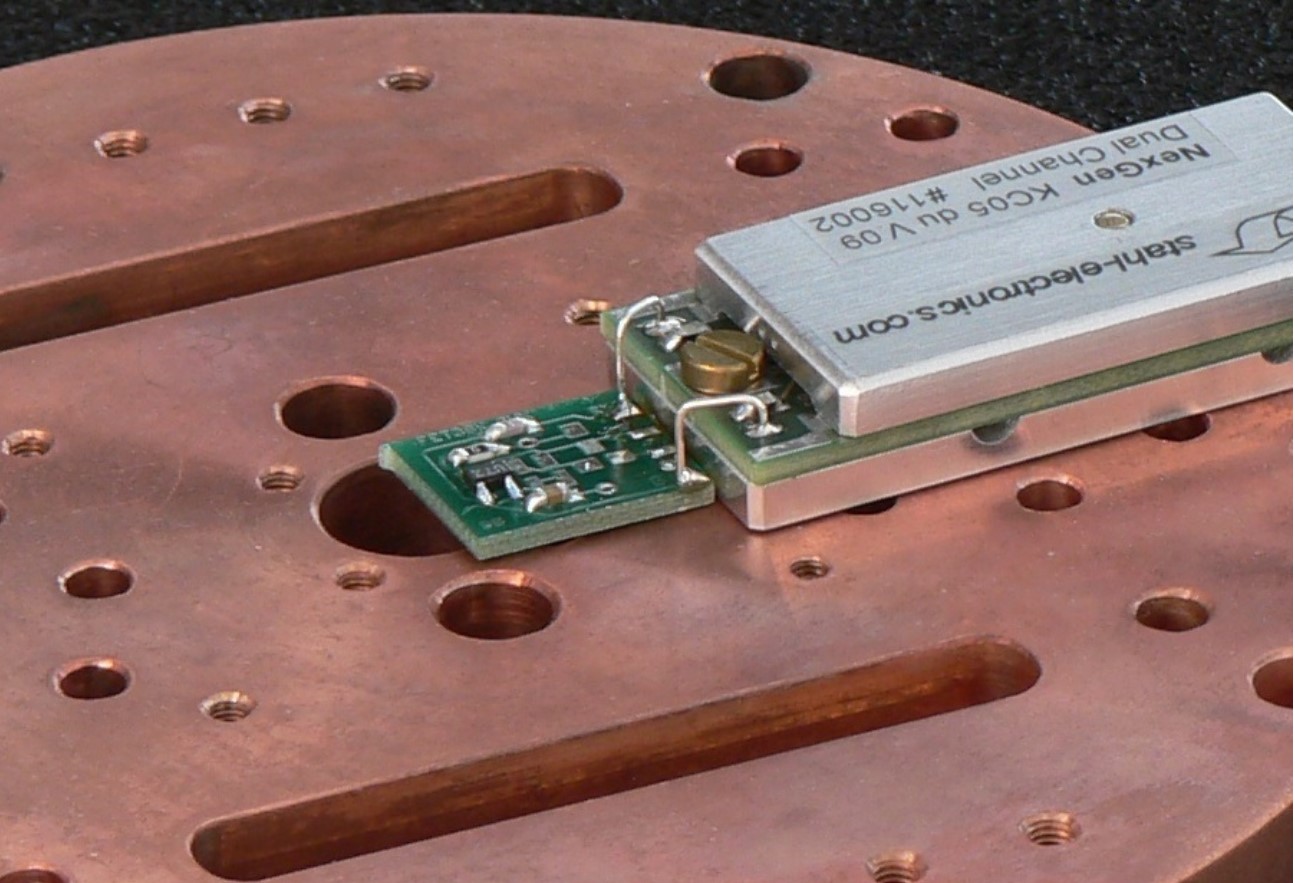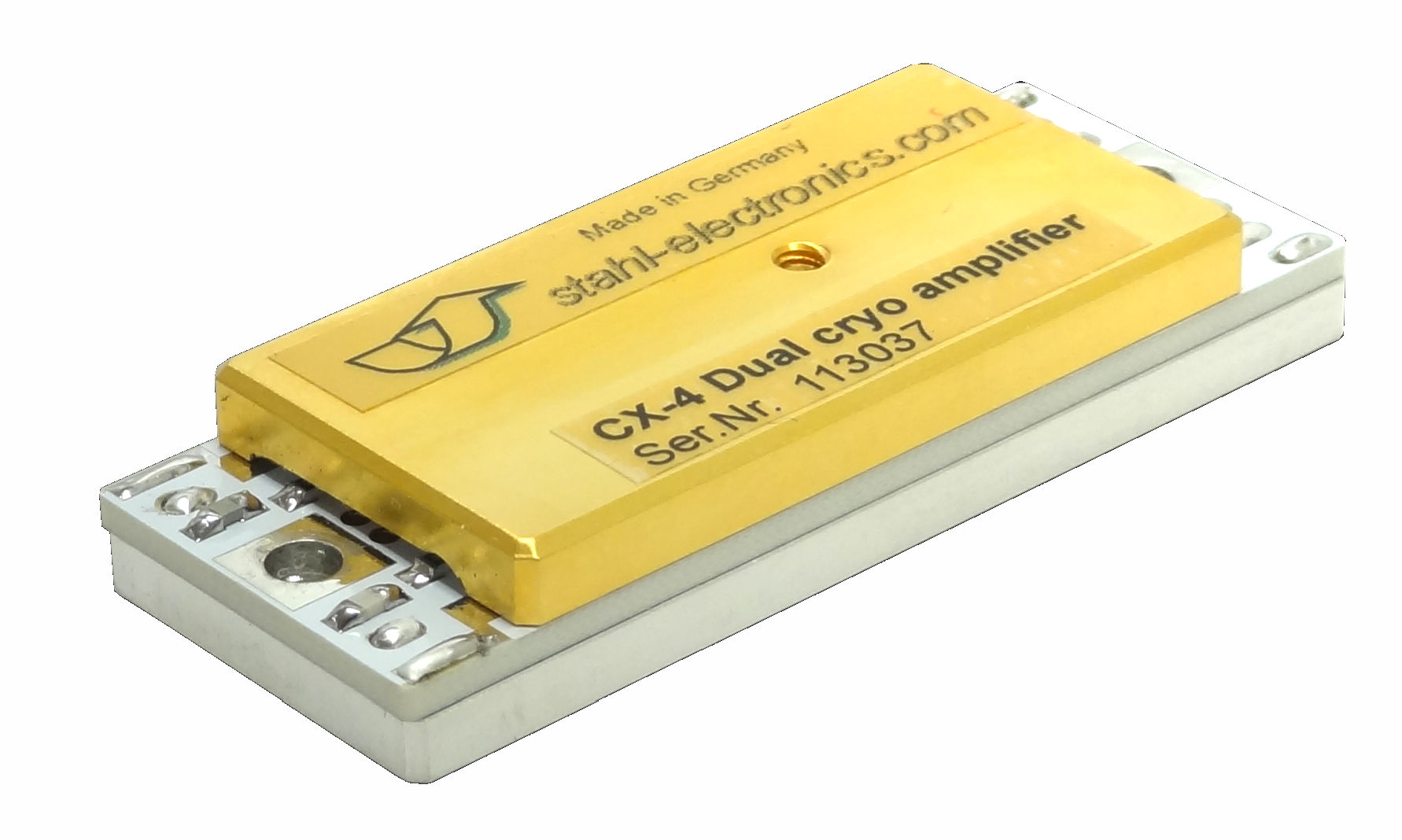
The new CX-4 is an ultra low noise FET preamplifier, operating in room temperature down to deep cryogenic environments (T = 4.2 K, liquid helium). It is an improved version of its predecessor NexGen3 KC05.
The setup is easy: simply connect the signal and bias voltages to the controller and you are ready to go. The CX-4 is designed for fully-automated plug-and-play functionality.
Key Features
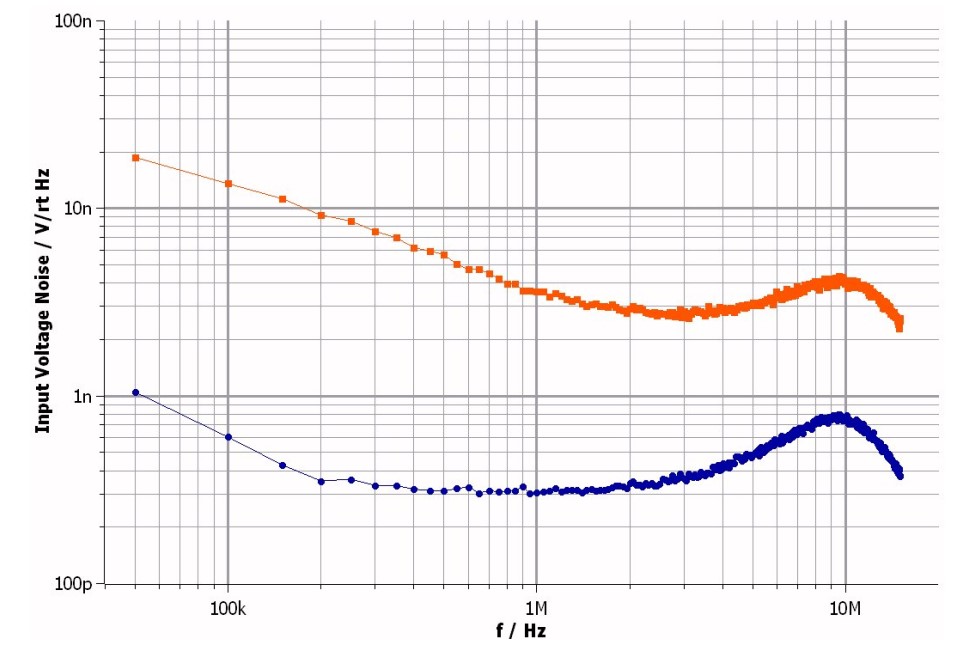
- ultra low input noise (typ. 0.31 nV/√Hz @ 1 MHz - device dependent)
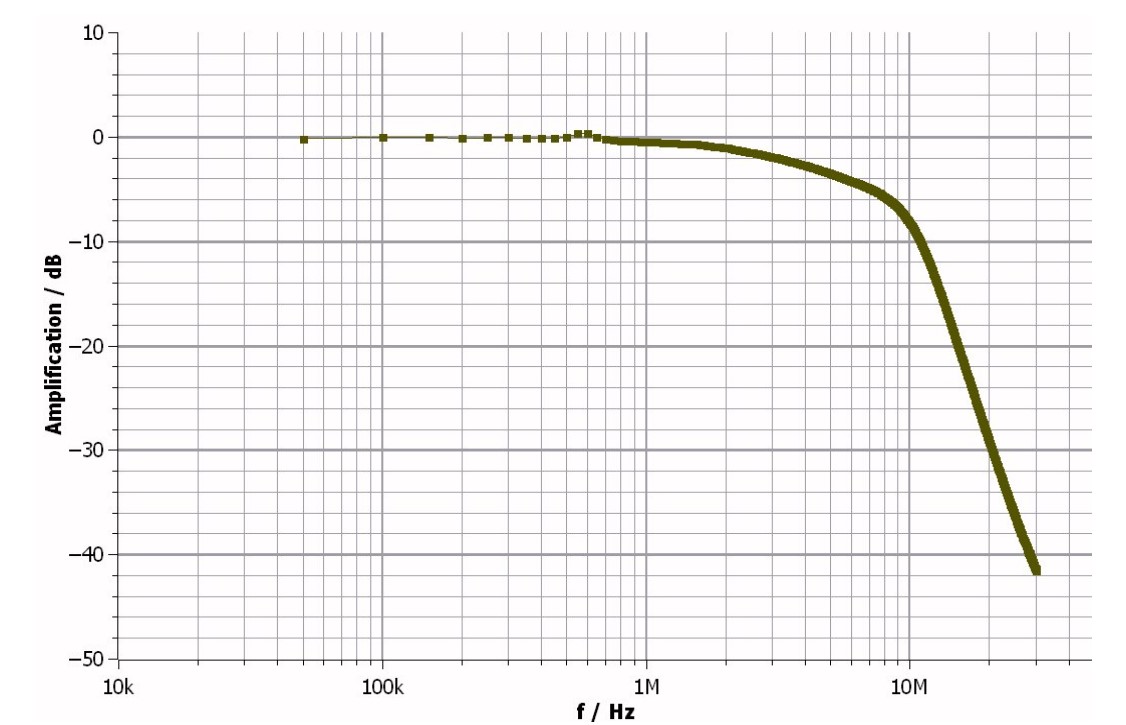
- frequency range 1 kHz to 4 MHz
option: 14 kHz to approx. 30 MHz - input impedance > 15 MΩ
- small size and tiny thermal load of only 300 μW per channel
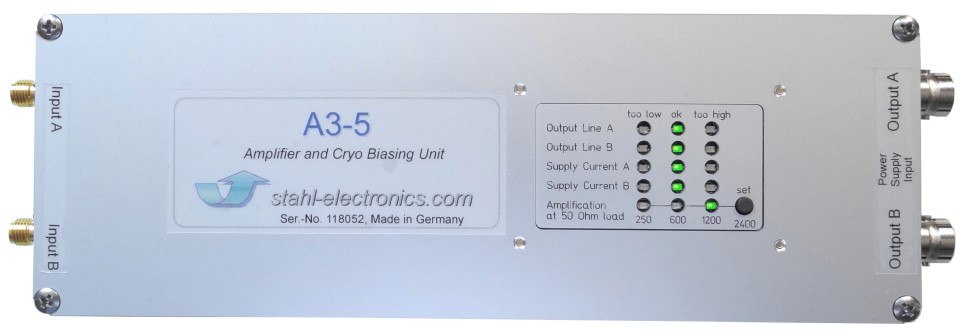
- fully-automated plug-and-play room temperature controller included!
CX-4 in research publications
An example of the application of CX-4 are measurements of excess noise in the anomalous metallic phase in amorphous indium oxide by André Haug and Dan Shahar at the Weizmann Institute of Science, Israel, published 16 January 2024 in Phys. Rev. B 109, 014514:
DOI:10.1103/PhysRevB.109.014514, pre-print: https://arxiv.org/abs/2305.15931
Further published setups using the CX-4:
-
M. Belianchikov, N. Morais, D. Konstantinov, “Image-charge detection of electrons on helium in an on-chip trapping device”, Physical Review Applied 23, 054026 (2025). The CX-4 serves as the cryogenic low-noise amplifier capacitively coupled to the detection electrode.
DOI:10.1103/PhysRevApplied.23.054026 -
S. Ringleb et al., “Off-resonance electronic detection and cooling of ions in a Penning trap”, Eur. Phys. J. Plus 139, 401 (2024). Signal from the correction electrode amplified by a CX-4.
DOI:10.1140/epjp/s13360-024-05183-2 -
I. Tamir et al., “Shot-noise measurements of single-atom junctions using a scanning tunneling microscope”, Review of Scientific Instruments 93, 023702 (2022). A CX-4 mounted close to the STM junction, read out through an A3-5 room-temperature controller.
DOI:10.1063/5.0078917
|
The development of CX-4 has received funding from the European Union's Horizon 2020 research and innovation programme under the Marie Skłodowska-Curie grant agreement No 721559.
|